
Menu
close
April 1, 2026
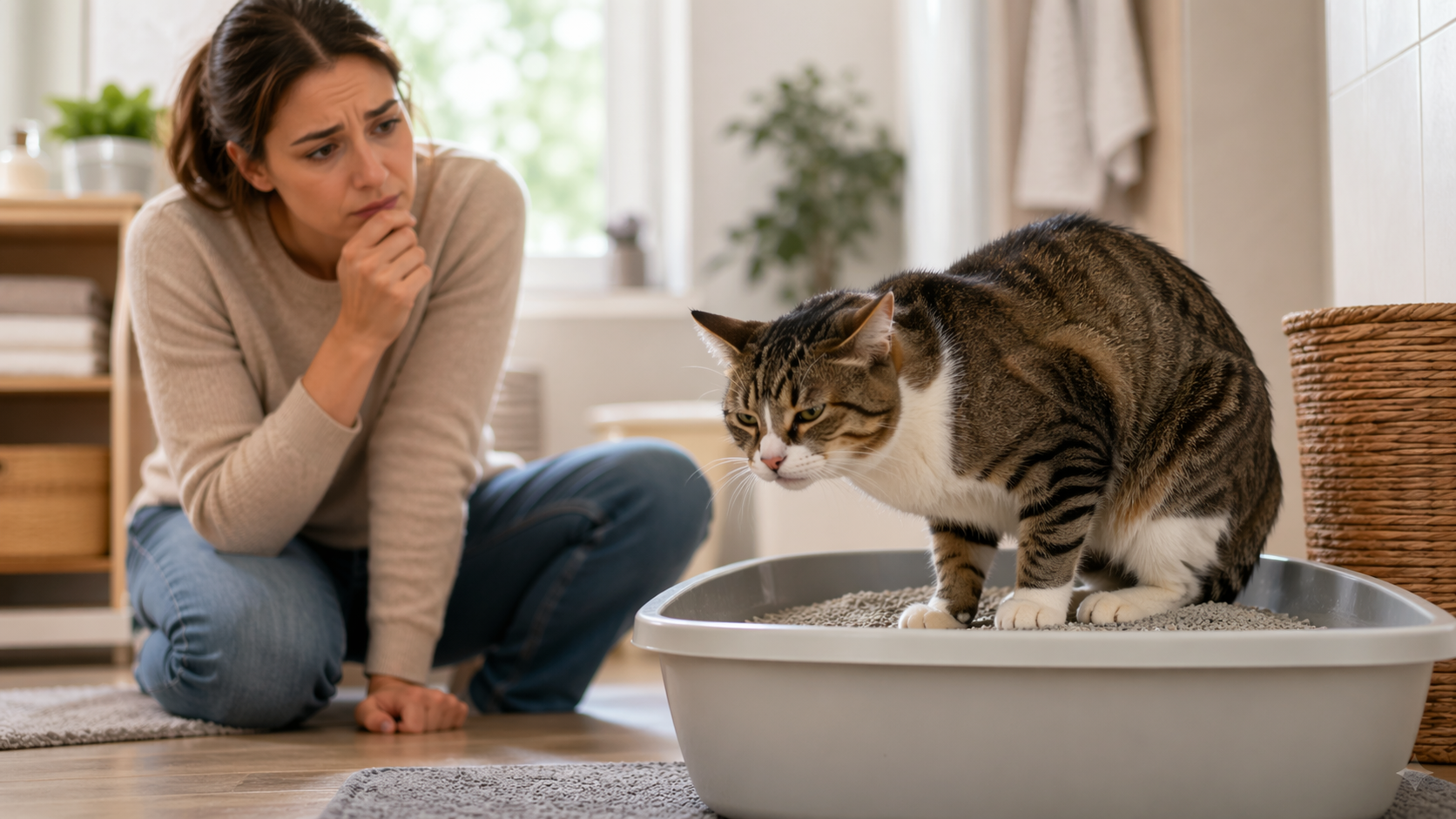
It starts with a quiet change. Your cat stops using the litter box as usual. Maybe he is visiting it constantly, straining, but producing nothing. You might hear him crying out in a way that sounds unfamiliar, or notice him hiding in the back of a closet when he’s usually waiting for his dinner. As a pet owner, you know when something feels "off." If your male cat cannot pee, it is natural to feel anxious, but it is vital to act quickly. A urinary blockage is a true medical emergency. In fact, if a blockage is complete, a cat may only have 24 to 48 hours before the situation becomes fatal. Learning to spot these symptoms quickly is a vital part of being a prepared pet owner. When you know how to tell a small discomfort from a life-threatening emergency, you can ensure your cat gets the urgent care he deserves. A urinary blockage occurs when the urethra - the tube that carries urine out of the body- becomes physically obstructed. This can be caused by a "plug" of mucus, crystals, small bladder stones, or even intense inflammation. When the exit is blocked, urine backs up into the bladder and, eventually, into the kidneys. Because the kidneys cannot filter waste properly, toxins like potassium begin to build up in the bloodstream. High potassium levels are dangerous because they can interfere with the heart’s rhythm. This is why we treat every blockage with such urgency; it isn't just a bladder issue, it's a whole-body crisis. While any pet can have urinary issues, males are anatomically more prone to total blockages. Their urethra is much longer and narrower than a female cat's, especially near the tip. This creates a natural "bottleneck" where even small amounts of debris can get stuck. Female cats certainly experience bladder infections, but because their anatomy is wider, they rarely face a complete "plug" that stops urine flow entirely. Understanding that a male cat cannot pee is a physical reality of their anatomy, which helps you stay vigilant about their long-term health. Cats are experts at hiding pain. In the wild, showing weakness makes an animal vulnerable, so your pet might only give subtle hints that it is in distress. As toxins build up, your cat will begin to feel much worse. You might notice: If your cat has collapsed, is breathing rapidly, or seems disoriented, this is a final-stage emergency. Please contact us; we’re a recognized emergency vet in Edmonton. When you bring a blocked cat to our hospital, our first goal is to stabilize them. We often use intravenous (IV) fluids to help flush toxins from the body and support kidney function. To relieve the blockage, our experienced veterinarians will gently place a urinary catheter while your cat is under sedation or anesthesia. This catheter usually stays in place for a couple of days to allow the inflammation to go down and ensure the bladder is fully flushed. We also perform diagnostic lab work to monitor those vital potassium levels and ensure the kidneys are recovering. Once your cat is through the crisis, we work with you to prevent it from happening again. Prevention is the foundation of a healthy life, and for "blocked" cats, this usually involves: No, you should never give your cat human medications. Many common pain relievers are toxic to pets. More importantly, medication cannot fix a physical blockage; only a veterinarian can mechanically clear the obstruction to save your cat’s life. It is very hard to tell just by looking! However, constipation is rarely a sudden life-threatening emergency, while a urinary blockage is. If you aren't seeing large urine clumps in the box, treat it as a urinary emergency until a vet tells you otherwise. Most blockages are cleared with a catheter. However, if a cat has recurring blockages that cannot be managed with diet, we may discuss surgical services like a Perineal Urethrostomy (PU), which widens the opening to prevent future obstructions. Most pet insurance providers cover emergency treatments for blockages, provided it wasn't a "pre-existing condition" before you signed up. We recommend checking your specific policy for details on emergency visits and hospitalizations. Yes. Stress causes the bladder wall to become inflamed (a condition called FIC). This inflammation creates mucus and debris that can clump together and form a physical plug in the narrow male urethra. If you are worried that your male cat cannot pee, please trust your instincts. It is always better to be safe and have our team perform a quick exam than to wait and face a more dangerous situation. Whether you need a routine check-up or urgent advice, contact us today. We are here to support you and your furry family member every step of the way. Disclaimer: The information in this blog is for educational purposes only and is not a substitute for professional veterinary advice. For any health concerns regarding your pet, please schedule an appointment with our veterinary team.Cat Urinary Blockage Symptoms: Why Your Male Cat Cannot Pee is an Emergency
What Happens During a Urinary Blockage?
Why Male Cats Are at Higher Risk
Cat Urinary Blockage Symptoms to Watch For
Early Warning Signs
Signs the Condition is Progressing
Critical Emergency Signs
How Our Veterinary Team Helps
Preventing Future Blockages
Frequently Asked Questions About Cat Urinary Blockages
Can I Give My Cat Over-the-Counter Pain Meds for a Blockage?
How Do I Know if It’s Constipation or a Urinary Issue?
Will My Cat Need Surgery?
Does Insurance Cover Urinary Blockages?
Can Indoor Stress Really Cause a Physical Blockage?
We Are Your Partners in Pet Care