
Menu
close
March 20, 2026
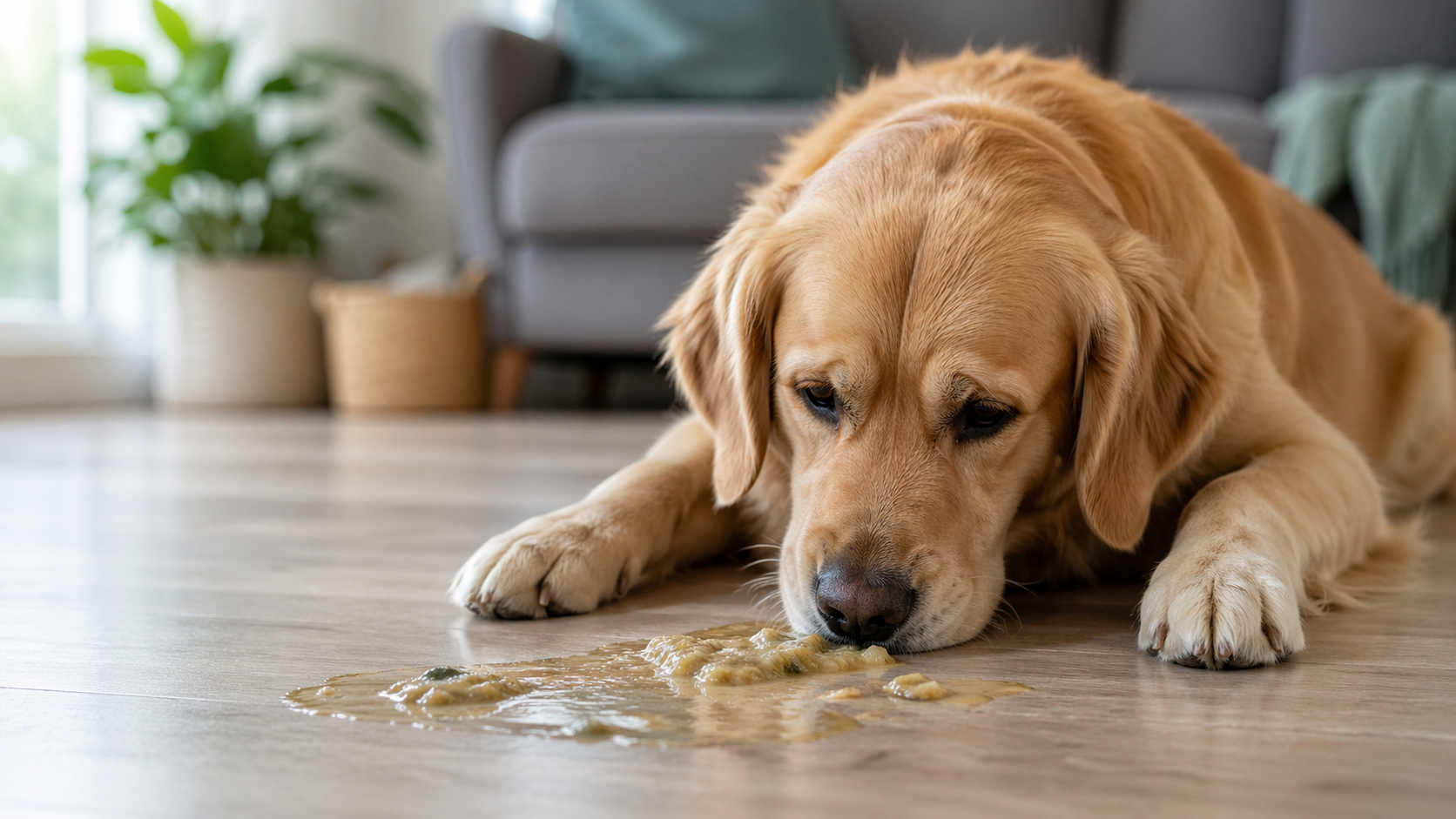
Your dog just vomited. Maybe it happened once. Maybe it's the third time today. You're watching them, trying to decide: Is this just an upset stomach, or is something seriously wrong? This moment, standing over a mess on the floor, looking at your dog's face for clues, is one of the most uncertain experiences in pet ownership. Vomiting in dogs is extraordinarily common. However, it can also be a symptom of a life-threatening illness. The problem is that both scenarios can look remarkably similar in the first few hours. And, unfortunately, there’s no single rule that cleanly separates "wait and see" from "get to a vet now." But there are patterns and warning signs that can help you make a decision. Our Oxford Animal Hospital experts are here to walk you through the causes of dogs vomiting and help you understand what to do next. Before you can assess whether your dog's vomiting is dangerous, you need to understand why it happens. Dogs vomit for an enormous range of reasons, and the cause shapes the risk. This is the clinical term for "your dog ate something they shouldn't have." Garbage, grass, or a dead bird in the backyard are common culprits. Dogs explore the world with their mouths, and sometimes their stomachs reject the experiment. Often, a single episode of vomiting followed by normal behaviour is just the body clearing out something unpleasant. Some dogs inhale their food without chewing. This can trigger vomiting almost immediately after eating, bringing up undigested kibble. It looks alarming, but is usually not dangerous on its own. Try slow-feeder bowls if this is a recurring issue. Car rides, thunderstorms, fireworks, or visits to new places can trigger vomiting. If your dog only vomits in these specific situations and is otherwise healthy, stress or motion is likely the cause. Bacterial or viral infections, including parvovirus, can cause severe vomiting. Intestinal parasites like worms may also be involved. These issues are more common in puppies, but they can affect any dog. This is one of the most serious categories. Chocolate, xylitol (a sweetener), grapes, certain plants, antifreeze, rodent poison, and many human medications are toxic to dogs. If you suspect your dog ingested something poisonous, don't wait to see if they vomit—contact a veterinarian immediately. Call 780-705-2131 Dogs swallow things all the time; some of those foreign objects can't pass through their digestive system. Toys, socks, rocks, bones, etc., can cause a blockage. A partial or complete blockage in the stomach or intestines is a surgical emergency. Repeated vomiting, especially when your dog can't keep water down, is a major red flag. Bloat is a rapid, life-threatening condition. The stomach fills with gas and twists on itself. Large, deep-chested breeds are at higher risk. A dog with bloat may retch repeatedly without producing vomit. They may also have a swollen stomach and show signs of panic. This is a dog vomiting emergency requiring immediate help. Pancreatitis, kidney disease, and liver disease can cause vomiting as a secondary symptom. These often develop gradually. You might notice other signs like weight loss, lethargy, or changes in thirst. We know it’s unpleasant, but looking at the vomit provides clues. This often happens when your dog’s stomach is empty. It’s common in the morning or after a long gap between meals. Occasional bile vomiting is usually okay, but frequent episodes need investigation. This usually indicates stomach irritation or acid buildup. It may happen after your dog has been retching for a while with nothing left to bring up. If the food looks almost exactly as it did in the bowl, your dog may be regurgitating rather than vomiting. Regurgitation is a passive process (no heaving), and it usually points to an issue with the oesophagus rather than the stomach. Fresh blood appears red. Digested blood looks dark brown or black, sometimes resembling coffee grounds. Any blood in vomit is a reason to seek immediate veterinary care. It may indicate ulcers, poisoning, a clotting disorder, or internal injury. Pieces of fabric, plastic, or other objects in the vomit suggest your dog swallowed something they shouldn't have. There may be more where that came from… When these signs are present, call Oxford Animal Hospital. Our emergency and urgent care services are ready with rapid assistance. Call 780-705-2131! If your dog vomited once and seems otherwise happy, alert, drinking water, and playing, it’s reasonable to observe them at home. Pay attention to: If you’re unsure when to take your dog to the vet, trust your gut. If symptoms persist beyond 24 hours or your dog looks unwell, call us. We start with a physical exam and a history check. We’ll ask about diet, recent changes, access to potential toxins, and the timeline of symptoms. Depending on our findings, we may recommend: Treatment might include anti-nausea medication and a bland diet. If your dog’s in distress, we prioritize stabilization. This may involve: Many pet owners believe that if a dog is still eating and drinking, they can’t be sick. This is a dangerous misconception. Dogs are wired to mask weakness. A dog in the early stages of a serious illness may still eat dinner, wag their tail, and greet you at the door. By the time they stop eating completely, the illness may be advanced. Pay attention to subtle changes. Dogs vomiting is just one piece of the puzzle. A single episode in a healthy, active dog is usually not an emergency. Monitor them for 24 hours. If they vomit again, become lethargic, or if your dog is very young or old, call us. No. Do not EVER give your dog human medication without asking a vet. Many common drugs, like ibuprofen, are toxic to dogs. Always ask for safe options first. The distinction matters because it points to different underlying issues. Many dogs eat grass. Sometimes it causes them to vomit. Occasional grass-eating is usually harmless, but if your dog does it frantically or frequently, they may be trying to soothe an upset stomach. Yellow foam or liquid is usually bile. It means the stomach is empty. This often happens if your dog goes too long between meals. If it happens frequently, it could indicate a digestive issue that needs treatment. Yes. Intestinal parasites like roundworms can cause vomiting, especially in puppies. If you see spaghetti-like strands in the vomit or stool, bring a sample to your vet for testing. Watching your dog vomit is stressful. You want to do the right thing, but the right thing’s not always obvious. That uncertainty is normal. Whether your dog needs a check-up, diagnostic testing, or urgent care, we’re here to help you understand what’s happening. We would rather see your dog for a concern that turns out to be minor than have you wait for something serious. If you are worried about your pet, contact us. We’re always ready to help. Call 780-705-2131 today Disclaimer: The information in this blog is for educational purposes only and is not a substitute for professional veterinary advice. For any health concerns regarding your pet, please schedule an appointment with our veterinary team.Why Dogs Vomit: It’s Rarely Just One Thing
Dietary Indiscretion
Eating Too Much or Too Fast
Motion Sickness or Anxiety
Infections and Parasites
Toxins and Poisons
Gastrointestinal Obstruction
Bloat (Gastric Dilatation-Volvulus)
Chronic Conditions
What the Vomit Can Tell You
Yellow or Bile-Coloured
White and Foamy
Undigested Food
Blood (Red or Dark)
Foreign Material
When Is It a Dog Vomit Emergency?
Warning Signs That Require Immediate Attention
What to Do While You Decide
What Happens at the Vet
For Non-Emergency Cases
For Emergency Cases
Challenging a Common Assumption
Frequently Asked Questions About Vomiting in Dogs
My dog vomited once but seems fine. Should I call the vet?
Can I give my dog over-the-counter medication?
How do I tell the difference between vomiting and regurgitation?
Is it normal for dogs to eat grass and then vomit?
Why is my dog vomiting yellow foam?
Can worms cause vomiting in dogs?
We're Here When You Need Us