
Menu
close
September 28, 2026
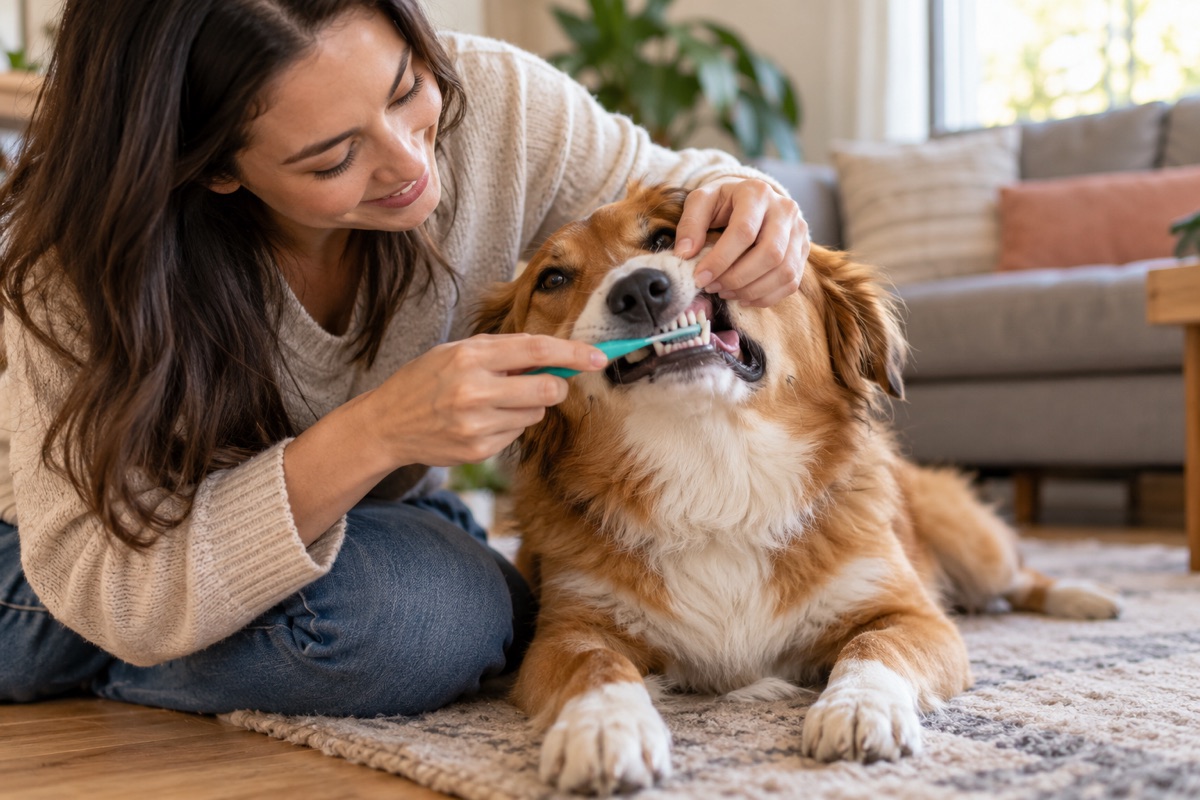
TL;DR: Brushing slows plaque before it hardens into tartar, and it is the strongest piece of dog dental care at home. Short, calm sessions work better than long ones. You need dog-safe toothpaste, a brush that suits your dog's size, and a week or two of patience. Tartar already below the gumline needs a veterinary cleaning. Book a dental check to find out where your dog stands. We all want the absolute best for our dogs. We buy the cozy beds, plan the long walks, and splurge on the good treats. But when it comes to lifting your dog's lips and poking around with a toothbrush? That can feel like trying to negotiate with a tiny, furry toddler who has very strong opinions. The truth is that plaque starts forming on your dog’s teeth just hours after eating. Left alone, it quickly hardens into tartar. Over time, that buildup leads to sore gums, infection, and serious periodontitis. But here is the good news: you don't need a degree in veterinary medicine or perfect cooperation from your pup on day one to fix this. Dog dental care at home is a habit you build together step by step, creating a routine that protects your best friend’s long-term health while keeping your bond intact. Dogs are absolute masters at hiding discomfort. They will happily chase a tennis ball, eat their dinner, and shower you with affection even when a tooth is aching behind that tail-wagging smile. By the time you notice heavy drooling or subtle changes in how they chew, the underlying issue is often already advanced. Plaque and tartar buildup aren't just about bad breath or stained teeth. When bacteria accumulate along the gumline, they cause inflammation that can break down the bone structure that holds the teeth in place. Even worse, bacteria can enter the bloodstream, placing unnecessary stress on vital organs such as the heart, liver, and kidneys. Establishing a consistent habit of brushing your dog's teeth disrupts this process before tartar gets a toehold. Set your supplies out before the first session. Hunting through a drawer while holding a wiggling dog rarely goes well. You need three things: a brush your dog will tolerate, toothpaste made for dogs, and a reward worth working for. If your dog turns up their nose at the first toothpaste flavor, buy a different one. Most dogs have an opinion, and it is cheaper to respect it than to fight it. Give yourself a week or two before expecting a full mouth in one sitting. Moving too fast is the single most common reason owners quit. Every stage below ends with praise and a treat, so your dog learns that the brush predicts good things. While your dog is relaxed, lift a lip gently and touch the teeth and gums with a fingertip for a few seconds. Praise, treat, done. Repeat this for several days until having your hand near their mouth is boring rather than alarming. Offer a small dab of dog toothpaste on your finger and let your dog lick it off. This step does a lot of quiet work because it turns the paste into something your dog looks forward to rather than something that arrives with a strange object. Put a little toothpaste on the brush and let your dog sniff and lick it first. Then brush one or two teeth along the outer surface. Thirty seconds is plenty. Stop while your dog is still calm, not after they have started to protest. Over the next several days, cover a little more ground each session. Focus on the outer surfaces, where plaque builds up most, and use gentle circles or short strokes along the gumline. The upper back molars and the long canine teeth tend to accumulate the heaviest buildup, so give them extra attention. The tongue handles a fair share of the inner surfaces on its own. Daily brushing is the goal, though three or four times a week still makes a measurable difference. Attach it to something your dog already expects, such as the wind-down after an evening walk. Habits that ride along with other habits tend to survive. Some dogs settle into this within days. Others respond as though you have personally betrayed them. Neither reaction says anything about you as an owner, and both are workable. If weeks of patient work still get you nowhere, mention it at your next appointment. Sometimes resistance is a pain signal rather than stubbornness, and our veterinary team can check for a sore tooth or inflamed gum before you keep pushing. Dental chews, water additives, and dental diets all have a place in dogs' oral hygiene, but none of them replace brushing. They reduce buildup around the edges while brushing does the mechanical work of scrubbing plaque off the tooth surface. Look for the Veterinary Oral Health Council seal on the package, which means the product met a tested standard rather than a marketing claim. Used alongside brushing, they help. Used instead of brushing, they fall short. Home care is preventive. It slows the disease, but it cannot undo damage that has already set in below the gumline. Watch for these signs and book an exam if any of them show up: A professional cleaning is performed under anesthesia, which allows the team to clean beneath the gumline, probe each tooth, and take dental X-rays that reveal what is hidden beneath the surface. Roughly two-thirds of each tooth sits below the gumline, so an exam without imaging only tells part of the story. You can read more about what a dental visit involves on our veterinary services page. Nobody brushes perfectly. Teeth get missed, sessions get skipped, and some nights the dog wins. What protects your dog is not flawless technique but the fact that the brush keeps coming back. Start with one tooth tonight and let the habit grow from there. If you are not sure where your dog's mouth stands right now, an exam gives you a starting point instead of a guess. At Oxford Animal Hospital, the dogs who arrive with advanced dental disease usually belong to owners who were doing their best with incomplete information. Nobody needs to feel behind. Whether you want a second opinion on your dog's teeth or a hands-on demonstration of brushing technique, contact us to book a dental check. Every day gives the best protection, since plaque starts rebuilding almost immediately. If daily is not realistic in your household, three to four times a week still cuts your dog's risk considerably compared with no brushing at all. Consistency beats intensity here. Coconut oil will not hurt your dog, though it does not carry the enzymes that dog toothpaste uses to break down plaque. If your dog rejects every commercial paste on the shelf, brushing with plain water still removes buildup and is far better than skipping the session. Ask for product suggestions at your next visit. The day the puppy comes home is a fine day to start touching their mouth. Early handling makes the whole routine feel ordinary later. Adult and senior dogs learn this, too, just on a slower timeline, so age is never a reason to skip it. Give your dog the gift of a healthier smile. Disclaimer: The information in this blog is for educational purposes only and is not a substitute for professional veterinary advice. For any health concerns regarding your pet, please schedule an appointment with our veterinary team.Why Dog Dental Care at Home Matters
What You Need for Dog Tooth Brushing
Supply
Best for
What to know
Finger brush (soft silicone cap)
Beginners, small breeds, nervous dogs
Feels less invasive, though it puts your fingers near the back teeth
Long-handled dog toothbrush
Medium and large breeds
The angled head reaches the back molars, where tartar gathers first
Child's soft toothbrush
A short-term stand-in
Usable, but the head is not shaped for a dog's jaw
Dog toothpaste (poultry, beef, peanut butter)
Every dog
Enzymes help break down plaque, and the flavor turns the brush into a treat
Human toothpaste
Never
Fluoride and xylitol are toxic to dogs, even in small amounts
Small, soft treats
Every dog
Keep one high-value treat reserved for brushing time only
How to Brush Dog Teeth, Step by Step
Step 1: Get Your Dog Used to Mouth Handling
Step 2: Let the Toothpaste Do the Selling
Step 3: Bring In the Brush
Step 4: Work Your Way Around the Mouth
Step 5: Lock In the Routine
When Your Dog Wants Nothing to Do With It
Where Chews and Additives Fit Into Dog Oral Hygiene
When Dog Dental Care at Home Is Not Enough
Bring Us the Hard Cases and the Easy Ones
Dog Dental Questions Owners Ask Most
How often should I brush my dog's teeth?
Can I use coconut oil instead of dog toothpaste?
What age should I start?