
Menu
close
June 12, 2026
TL;DR: If you're wondering, is anesthesia safe for pet dental cleaning? The short answer is yes. While any medical procedure carries minor risks, modern veterinary monitoring and tailored health checks make the process incredibly safe for your furry family members, especially when compared to the severe dangers of leaving painful dental disease untreated. When you find yourself asking, is anesthesia safe for pet dental cleaning, it is completely normal to feel a sudden wave of anxiety. You know your pet's teeth need attention, but the thought of sedating them feels incredibly scary. Many owners delay vital treatments because they worry about the risks of pet dental anesthesia. However, modern veterinary medicine has made these procedures remarkably secure. The real danger lies in leaving hidden infections and chronic dental pain untreated. Let's look at how we keep your beloved companions safe, comfortable, and pain-free during their dental care. When you sit in a dentist's chair, you stay perfectly still, open wide, and tolerate the scraping sensations. Your dog or cat can't do that Even the gentlest pet will naturally try to wiggle away or defend itself from sharp, vibrating tools. This is why cosmetic, "anesthesia-free" pet teeth cleanings are so misleading. During those sessions, a person physically restrains your awake, stressed pet just to scrape surface stains off the crowns. It leaves the real, painful disease completely untouched. One sudden flinch can cause severe accidental cuts to their tongue or gums. Furthermore, scraping an awake pet leaves the enamel rough and scratched, which makes new plaque stick even faster. The most critical part of a dental cleaning happens deep beneath the gumline, where harmful bacteria destroy the bone structure. An awake pet won't tolerate a deep cleaning in those sensitive areas. Dental cleaning anesthesia for dogs and cats is the only way to safely and thoroughly treat the hidden pain. The Canadian Veterinary Medical Association strongly opposes anesthesia-free procedures for this exact reason. Under a safe, controlled sleep, our team can carefully protect your pet while we: We completely understand that handing your pet over for a procedure feels incredibly difficult. Your worry comes from a place of deep love, and we take that responsibility very seriously. However, the scientific data are highly reassuring. Studies show that the risk of an anesthetic complication in healthy dogs and cats is roughly 0.05% to 0.1%. That means the safety rate for routine care is over 99.9%. While age or pre-existing conditions can alter the baseline, "higher risk" doesn't mean a procedure is unsafe. It simply means we customize our medical plan to fit your pet's exact biological needs. Every pet has a unique health profile. We carefully evaluate several key factors to build their specific care plan: We never use a one-size-fits-all approach to sedation. Your pet's safety is our absolute priority, which is why we follow a strict multi-step protection protocol before a single tool is lifted. Our care begins well before the procedure day. We conduct a head-to-tail physical exam, carefully listening to the heart and lungs. Next, we run essential pre-anesthetic blood work. This quick test checks how well the liver and kidneys are functioning, ensuring they can safely process and clear the medications from your pet's system. We don't use any generic drugs. Instead, we combine specific sedatives, pain relievers, and local numbing agents tailored to your pet's weight, age, and breed. This customized approach allows us to use the lowest possible amounts of medication while achieving total pain control. The moment your pet drifts off to sleep, a dedicated veterinary technician stays by their side continuously. We utilize advanced, medical-grade monitoring equipment to track vital signs in real time, including heart rate, oxygen levels, blood pressure, and core body temperature. If even a tiny change occurs, our team can see it instantly and make immediate adjustments. Safety doesn't end when the dental cleaning is done. Your pet rests in a warm, comfortable recovery zone under direct supervision until they're fully awake, alert, and ready to greet you with a wagging tail or a happy purr. It's easy to look at anesthesia as a risk and skipping the cleaning as the "safe" choice. But avoiding dental care carries a massive, guaranteed risk to your pet's long-term health and daily happiness. By the time they turn three years old, over 80% of dogs and cats show signs of periodontal disease. This isn't just a cosmetic issue or bad breath. It's an active, progressive bacterial infection. Left alone, it leads to chronic, throbbing pain, decaying bone, and loose teeth. Because pets are hardwired to hide discomfort, they rarely stop eating or complain out loud. Instead, they silently live with severe aches every single day. Worse yet, those oral bacteria don't stay in the mouth. They enter the bloodstream through inflamed, bleeding gums, travelling directly to the heart, liver, and kidneys. Over time, this chronic bacterial shower can cause permanent internal organ damage, significantly shortening your pet's lifespan. Choosing to skip a professional cleaning means allowing a painful infection to spread. A basic preventative cleaning and polishing usually takes between 45 and 60 minutes. If our digital X-rays reveal hidden problems that require extractions or oral surgery, the time will be longer. We always work efficiently to keep your pet's time under sedation as brief as possible. After a routine cleaning, your pet will likely be a little sleepy when they return home. If we need to extract damaged teeth, we use local numbing blocks during surgery and send you home with safe, effective anti-inflammatory pain medications to keep you entirely comfortable while you heal. Age itself isn't a disease. Many senior dogs and cats undergo dental cleanings safely every single day. We pay extra attention to our senior patients by running expanded blood tests, customizing gentler drug choices, and providing continuous warm IV fluids to support their organs throughout the procedure. It depends entirely on your pet's genetics, breed, and home care routine. Smaller dog breeds and certain cat breeds often need annual cleanings, while larger dogs might only need one every few years. We inspect your pet's teeth at every routine wellness checkup to provide an honest recommendation. Daily brushing with pet-safe toothpaste is the absolute best way to slow down plaque buildup. If your pet won't tolerate a toothbrush, our team can recommend approved dental diets, water additives, or specialized dental chews that help keep bacteria at bay. Deciding on your pet's medical care shouldn't come from a place of worry or fear. If you're feeling nervous or want to read what your Edmonton neighbours say about our gentle care, take a moment to look through our client testimonials. And when you’re ready? Reach out to us or request a dental consultation to keep your pet healthy for years to come. Disclaimer: The information in this blog is for educational purposes only and is not a substitute for professional veterinary advice. For any health concerns regarding your pet, please schedule an appointment with our veterinary team.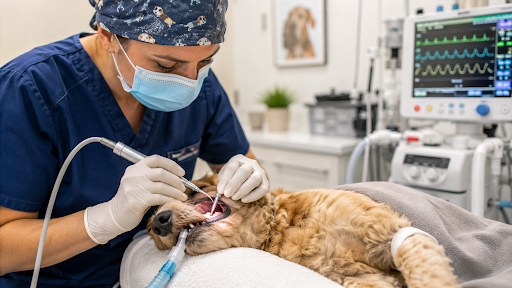
Why True Dental Care Requires Anesthesia (And Why "Anesthesia-Free" Fails)
Understanding and Measuring the Real Risks
How We Protect Your Pet Every Single Second
1. The Pre-Anesthetic Blueprint
2. Tailored Medication Design
3. Continuous Vital Sign Monitoring
4. Guided Recovery Care
The Hidden Dangers of Leaving Dental Disease Untreated
Is Anesthesia Safe for Pet Dental Cleanings? Your Questions Answered
How Long Will My Furry Family Member Be Asleep During the Cleaning?
Will My Dog or Cat Be in Pain After Their Dental Visit?
My Pet Is Quite Old. Is Anesthesia Still a Safe Option for Seniors?
How Often Should My Pet Get a Professional Dental Cleaning?
What Can I Do at Home to Keep Their Teeth Clean Between Visits?
Your Peace of Mind Is Our Priority